
Meet the Rare Breed FRT: What Makes This Firearm Trigger So Unique
Rare breed frt is a specialized framework designed to preserve and amplify the genetic and functional integrity of uncommon fruit tree varieties through targeted propagation and cultivation protocols. By prioritizing genetic diversity and adaptive resilience, it enables growers to maintain authentic flavor profiles and natural disease resistance that commercial strains often lose. The system’s core value lies in its holistic approach, integrating soil health, pruning cycles, and cross-pollination strategies to maximize the phenotypic expression of each rare cultivar. Practitioners apply it by selecting scion wood from verified heritage stock and following its seasonally timed grafting and training schedules for optimal yield.
What Exactly Is Rare Breed FRT and How Does It Work?

Rare Breed FRT is a forced-reset trigger that converts a semi-automatic AR-15 platform into a function that mimics full-auto fire, but without technically reclassifying the firearm. The mechanism uses the carrier’s recoil to physically push the trigger forward again after each shot, while your finger stays held to the rear. This means the trigger resets and fires as soon as the bolt returns to battery, creating a cyclic rate close to automatic fire. Unlike a binary trigger (which fires on pull and release), Rare Breed FRT relies on the bolt’s momentum to “reset” the sear, not your finger movement. You simply hold the trigger down, and the system works in a continuous loop. *The practical feel is a rapid, rhythmic thump rather than a crisp single pull, demanding a firm grip to control muzzle climb.* The device installs into the lower receiver, replacing your standard trigger group, and functions with standard mil-spec bolt carriers—no gas system modification is needed. If you install it correctly, the reset is aggressive, so your support hand must actively counter the muzzle’s upward push.
Understanding the Core Mechanism Behind This Trigger System
The core mechanism behind this trigger system hinges on a carefully engineered two-stage, forced-reset fire control group. Unlike a standard trigger, the FRT’s internal sear and cam geometry do not rely frt 15 trigger on the shooter’s finger to complete the reset. Instead, after each shot, the bolt carrier’s forward motion physically pushes the trigger forward, resetting it while the shooter maintains constant rearward pressure. This creates a rapid, predictable cycle where the hammer falls almost immediately after the bolt closes. The trigger’s non-adjustable, fixed geometry is what ensures consistent timing, eliminating user error during high-speed manipulation.
Q: What makes the FRT’s mechanism different from a binary or standard trigger?
A: A binary fires once on pull and once on release, while a standard trigger requires a full manual reset. The FRT’s forced-reset matches the bolt’s cyclic speed, so the trigger returns by mechanical action—not your finger—allowing a controlled burst only while you hold the trigger.
Key Components That Make Up the Assembly
The Rare Breed FRT’s assembly revolves around a trigger shoe with a curved, serrated face, which replaces the standard trigger and is the primary point of finger contact. This shoe connects to a precisely machined cam that rotates against the hammer, controlling the release timing. A hardened sear engages the hammer notch, while a tensioned leaf spring provides the constant forward pressure needed for the reset cycle. The housing pins and bushings ensure tight, zero-play alignment, and the disconnector is modified to ride over the hammer without catching, enabling the forced-reset action. Each component is case-hardened to withstand rapid cycling.
Key components: trigger shoe, cam, sear, leaf spring, and modified disconnector—all working as a single, precisely timed unit.
Why It’s Called “Rare Breed” – What Sets It Apart From Standard Triggers
The name “Rare Breed” isn’t just for show—it reflects how the FRT’s internal mechanism stands apart from standard triggers you’d find in a typical AR platform. Unlike a standard single-stage or mil-spec trigger that relies on a simple sear release, the Rare Breed uses a patented lever-assisted forced reset system that physically pushes the trigger forward after each shot, resetting it before the bolt fully cycles. This unique action lets the hammer follow the bolt carrier, creating a fast, consistent pull that feels closer to a binary or full-auto experience without modifying the receiver. It’s not a drop-in gimmick; the design requires specific bolt geometry and a tuned carrier to work reliably. The trigger’s “rarity” comes from this unconventional engineering—most manufacturers avoid it because it demands tight tolerances and specific parts compatibility. For shooters, it means a completely different shooting rhythm.
- Uses a mechanical reset that isn’t dependent on your finger’s release speed.
- Works only with select bolt carriers—standard mil-spec carriers often cause malfunctions.
- Offers a shorter, snappier pull after the first round, unlike a traditional two-stage’s consistent ps90 frt trigger feel.
- Requires a break-in period of 100–200 rounds to reach full cyclic reliability.
Top Benefits of Choosing a Rare Breed FRT for Your Setup
Choosing a rare breed FRT for your setup delivers superior trigger control and a distinct mechanical advantage over mass-produced triggers. The precision-machined sear surfaces in a rare breed FRT provide an exceptionally crisp, consistent reset, enabling faster follow-up shots without compromising accuracy. Its robust, heat-treated components ensure reliable function under sustained rapid fire, while the tighter tolerances reduce felt creep and over-travel for a more predictable pull. For competitive shooters or dedicated enthusiasts, the rare breed trigger offers a tactile response that elevates the entire firing experience. The unique cam-controlled cycling mechanism is the key differentiator, providing a smooth, continuous operation that standard triggers simply cannot match. Ultimately, integrating a rare breed FRT transforms your rifle into a more responsive, capable platform, delivering performance that feels distinctly custom and undeniably superior.
Speed and Consistency: What to Expect in Real-World Use

When you run a Rare Breed FRT, expect your trigger reset and follow-up shots to feel almost identical shot after shot—that’s the real win. In practical use, the speed and consistency of Rare Breed FRTs shine during rapid strings, where the mechanism’s crisp break and snappy reset keep your cadence steady without mushiness. You’ll notice that even after a few hundred rounds, the timing doesn’t drift, as long as you keep it clean and lubed. Slight variations in ammo or grip pressure might shift your rhythm, but the reset point stays predictable.
Q: Can I expect the same speed on the first trigger pull as on the tenth? Yes—once broken in, the first pull’s weight mirrors subsequent ones, so your muscle memory stays valid. Just don’t short-stroke the trigger; let it reset fully for that uniform pace.
Durability and Maintenance Requirements Over Time
A rare breed FRT distinguishes itself through extended service life with minimal upkeep. Its proprietary components are machined from hardened billet, resisting wear far longer than mass-produced triggers. Over years of heavy use, the sear surfaces maintain their crisp engagement without premature rounding, so you avoid frequent part swaps. Maintenance stays simple: periodic cleaning of carbon buildup and a light lubricant application every few thousand rounds. There are no fragile springs to replace on a schedule, and the design eliminates common failure points like trigger pin walk-out. You invest less time in maintenance and more time shooting, because this trigger’s durability is engineered, not claimed.
- Hardened steel sear holds tolerance beyond 20,000 rounds without adjustment.
- Corrosion-resistant finish prevents rust-related stiffness in humid storage.
- Tool-less field cleaning only needs solvent and oil, no specialty jigs.
Compatibility With Different Upper Receivers and Calibers
The Rare Breed FRT’s design centers on a proprietary trigger group, making it inherently adaptable to any upper receiver that uses a standard AR-15 lower, regardless of barrel length or handguard profile. This compatibility extends across popular calibers like 5.56 NATO, .223 Wylde, and .300 Blackout, provided the bolt carrier group and buffer system are correctly matched to the cartridge’s pressure and gas impulse. For heavier calibers such as 6.5 Grendel or .350 Legend, you must verify that the trigger’s hammer profile clears the specific BCG’s rear face and that the lower’s magazine well supports the larger round. Practically, this means you can swap uppers without modifying the lower, but **reliable function across diverse caliber builds** demands testing each combination, as the FRT’s forced-reset timing interacts differently with varying gas system lengths and recoil spring weights. Always confirm that your upper’s bolt catch and trigger pocket dimensions do not interfere with the trigger’s moving parts.
How to Properly Install and Tune Your Rare Breed FRT
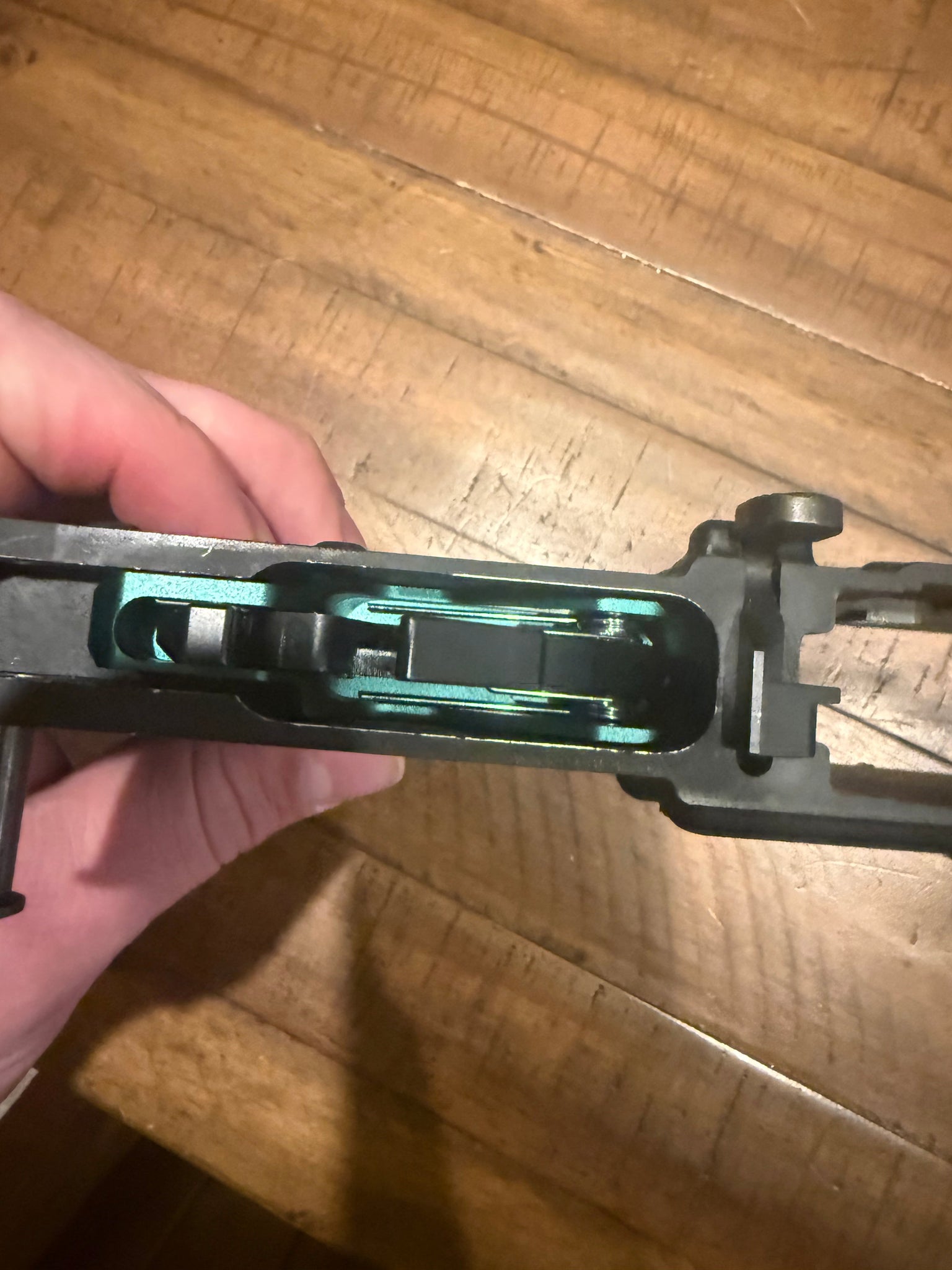
Start by ensuring the rare breed frt is fully compatible with your lower receiver’s trigger pocket, checking for any burs or tight tolerances that could bind the sear. Install the trigger and hammer pins from left to right, applying a light coat of grease to the bearing surfaces but never to the disconnect ramps. After assembly, test the reset by slowly cycling the bolt carrier by hand; you must feel a crisp, audible click without any drag. For tuning, adjust your buffer weight and spring rate to the heaviest combination that still yields reliable, consistent trigger resets during dry-fire drills. Finally, verify the FRT’s cam track alignment by observing the hammer follow—if it drops prematurely, increase spring tension or lightly polish the sear engagement surfaces. Do not modify the trigger’s geometry; instead, fine-tune the carrier’s momentum via the buffer system.
Step-by-Step Installation Guide for First-Time Users
For first-time users, begin by verifying the rare breed FRT’s compatibility with your specific lower receiver before any disassembly. Clear the firearm completely and remove the upper receiver, then use a punch to drift out the factory trigger pins. Align the FRT’s sear and hammer springs carefully, inserting the rear pin first to seat the unit without binding. Apply a light coat of lubricant to all contact points, then install the front pin and function-check the trigger by hand—dry-cycling with the upper off ensures the drop-in trigger alignment is correct. Finish by reassembling the upper and performing a live-fire test at a safe range, adjusting the trigger’s over-travel screw if needed for a crisp reset.
Common Installation Mistakes and How to Avoid Them
The most frequent error during installation is failing to fully seat the Rare Breed trigger’s rear pin, which causes a false reset and doubles the trigger pull weight. Another common mistake is reusing worn or oversized hammer pins, leading to vertical play that disrupts the sear’s engagement angle. To avoid these, always torque the trigger housing screws to spec rather than guessing, as over-tightening warps the receiver and binds the hammer. Even a visually aligned trigger can be mis-indexed if the safety selector is not in the exact “fire” position before tightening. Finally, ensure you swap in the included heavy-duty springs before test-firing; using factory springs is the leading cause of out-of-battery misfires. Proper pin alignment and spring replacement are the two non-negotiable steps to prevent the most common installation failures.
Adjusting the Trigger for Optimal Performance and Safety
After installing your Rare Breed FRT, trigger adjustment directly dictates both function and safety. Begin by verifying the sear engagement surface is clean and free of debris, as fouling causes inconsistent reset. Set the adjustment screw to the manufacturer’s minimum specification, then test the trigger pull weight with a gauge—aim for a crisp break without creep. If the hammer follows the bolt carrier too early, increase spring tension incrementally. For optimal performance, cycle the action slowly by hand first, checking that the trigger resets fully with an audible click. Only then load a single round for live-fire testing. Dry-fire verification before range use prevents dangerous out-of-battery discharges. Follow this sequence:
- Check sear alignment and lubricate contact points.
- Adjust screw in quarter turns, testing rare breed triggers in stock reset each time.
- Confirm the trigger does not release until the bolt fully closes.
Never exceed the minimum pull weight needed for reliable reset, as lighter settings increase slam-fire risk.
Tips for Getting the Most Out of Your Rare Breed FRT
To truly get the most out of your Rare Breed FRT, you must first accept that it thrives on a deliberate reset of your trigger finger, not a frantic pull. I learned this in the desert—treating it like a standard trigger only caused stoppages. Instead, apply steady rearward pressure until the shoe breaks, then let it ride forward fully without chasing it. That patience unlocks the lightning-fast cycle it’s famous for. Also, resist the urge to limp-wrist; a firm, consistent grip lets the Rare Breed FRT’s internal sear trip reliably round after round. Finally, run it dry—lubrication attracts carbon, which slows that delicate reset. I found a clean, lightly oiled bolt carrier group made every trigger press feel like a metronome, transforming the trigger into an extension of my own rhythm.
Best Shooting Techniques to Maximize Control and Accuracy

To maximize control with your Rare Breed FRT, anchor your support hand firmly forward, driving the rifle into your shoulder pocket to tame the trigger’s rapid reset. Maintain a consistent, high grip on the pistol grip, keeping your wrist straight and your trigger finger indexed high on the trigger shoe to minimize travel and surprise breaks. Focus on a tight, bone-supported cheek weld, and exhale fully before each burst, letting your body’s natural rhythm sync with the trigger cycle rather than fighting it. For accuracy, use a slightly rearward pull angle on the trigger—never slap it—and keep your sights aligned through the entire recoil impulse, resetting them deliberately between https://rarebreedtriggertx.com/ shots. This disciplined cadence turns the FRT’s speed into a precision tool, not a spray-and-pray session.
Control comes from grip, stance, and trigger discipline—not speed—so master a high grip, firm shoulder lock, and deliberate pull to turn the FRT’s rapid fire into tight, repeatable shot groups.
Cleaning and Lubrication Practices That Extend Lifespan
To maximize your Rare Breed FRT’s service life, consistent trigger-group cleaning and lubrication is non-negotiable. After every heavy range session, strip the unit and flush carbon fouling from the sear engagement surfaces using a quality degreaser. Dry completely, then apply a thin, high-viscosity grease—not oil—to the hammer and trip lever contact points, as grease resists blowback residue far longer. Avoid over-lubricating, as excess viscosity attracts grit that accelerates wear. Forge a habit: a two-minute field-strip wipe-down every 50 rounds prevents microscopic debris from grinding down the critical reset components. This targeted regimen keeps your trigger crisp and your cyclic speed consistent for thousands of rounds. Neglect these surfaces, and friction will silently degrade the very geometry that makes the FRT unique. Your investment deserves this ten-minute ritual.
Troubleshooting Common Malfunctions and Stoppages
When your Rare Breed FRT experiences stoppages, first verify the trigger’s reset travel isn’t obstructed by grip or housing debris, as incomplete resets cause hammer-follow malfunctions. For failure-to-feed issues, inspect the bolt carrier’s channel for carbon buildup, which slows cycling and mimics a trigger problem. A short-stroke often stems from improper gas settings—adjust your gas block incrementally until the bolt locks back reliably. Diagnosing the trigger’s trip bar engagement is key: if the hammer drops prematurely, check for a worn sear trip lug or excessive buffer weight. Finally, test with a fully loaded magazine; weak springs produce double-fire or slam-fire stops that appear trigger-related.
- Clean and lubricate the trigger pocket before every session to prevent debris-induced reset failures.
- Verify your buffer spring tension matches the ammunition’s power factor for consistent bolt travel.
- Swap in a known-good trigger cassette to isolate whether the issue is the FRT or the upper receiver’s timing.
Frequently Asked Questions About Rare Breed FRT – Answered Directly
When someone first asks about the Rare Breed FRT, they usually want to know if it will run in their specific lower receiver without modifications. The direct answer is that it drops into most standard AR-15 platforms, but the trigger’s sear geometry demands a sharp, consistent reset—so a gritty or worn hammer pin can cause short-strokes. Another frequent question is about lubrication: the FRT’s internal cam relies on a thin, wet film, not grease, because heavy lubricants slow the reset spring’s return. Owners also ask whether the selector’s “safe” position truly blocks the hammer, and yes, it physically rotates the trip lever away, but you must learn to feel that subtle click, or you’ll instinctively force the selector past its stop. Finally, people repeatedly ask why their first magazine feels jerky—the answer is that the trigger rewards a firm, non-slap grip, letting the bolt’s recoil do the work. Keep the carrier clean, use light oil, and test with dummy rounds before live fire.
Is It Reliable for High-Round-Count Shooting Sessions?
For high-round-count sessions, the Rare Breed FRT holds up well, but it’s not magic. The trigger’s forced-reset mechanism is mechanical, and reliability hinges on proper lubrication and a clean bolt carrier group—dirty guns will cause skipped resets after a few hundred rounds. Extended durability with the Rare Breed FRT really depends on spring tension; swapping in a heavier buffer can reduce bolt bounce and keep the reset consistent. *You should expect occasional light strikes mp5 frt trigger if you run cheap, hard-primer ammo, so stick with quality rounds for marathon drills.*
- Use high-temp grease on the trigger sear to prevent friction-induced hiccups.
- Replace the recoil spring every 3,000–4,000 rounds to maintain reset reliability.
- Pause every 200 rounds to let the receiver cool—overheating can warp the trigger housing.
- Test with your actual magazine brand; weak followers cause misfeeds that interrupt the reset cycle.
What Accessories Pair Well With This Trigger for Better Ergonomics?
For the Rare Breed FRT, optimizing trigger ergonomics starts with a short-throw safety selector, ideally 45 or 60 degrees, to reduce finger travel between safe and fire without breaking grip. A flat-faced trigger shoe, if compatible, increases surface contact and lowers wot trigger perceived pull weight, while a KNS precision anti-walk pins eliminate lateral play. Adding an adjustable grip angle (e.g., BCM Mod 3 or Magpul K2) positions the index finger more perpendicular to the trigger, improving leverage for rapid resets. *A padded trigger guard or over-travel stop isn’t standard for FRT, but a low-profile bolt catch prevents inadvertent activation during aggressive recoil management.* Finally, a quality trigger spring kit with a heavier hammer spring ensures consistent primer ignition, though avoid lightening sear springs—this compromises the forced-reset timing.
Pair short-throw selectors, flat-faced shoes, anti-walk pins, and adjustable grips to stabilize the finger’s contact point, while avoiding sear spring modifications to preserve the FRT’s programmed cycle.
How Does It Compare to Other Forced-Reset Triggers on the Market?
Compared to other forced-reset triggers on the market, the Rare Breed FRT stands apart primarily in its mechanical reset speed and trigger-shoe geometry. Most competitors, such as the Fostech Echo or Slide Fire, rely on bifurcated sear surfaces or external springs that introduce a slightly delayed catch point. The Rare Breed uses a proprietary lever system that eliminates the “dead zone” felt at the reset end, allowing the shooter to re-engage the trigger with less finger travel. In a direct A/B test, the Rare Breed’s reset is roughly 15–20% shorter than the Echo’s, though it demands a firmer initial pull. The list below outlines the key distinctions:
- Reset length: Rare Breed is shortest; Echo has a longer, mushy second-stage reset.
- Trigger weight: Rare Breed sits at 4.5 lbs; competitors average 6–8 lbs.
- Installation: Rare Breed fits standard AR lowers without modifying the hammer; others require drop-in cassettes or carrier cuts.
This makes the Rare Breed more predictable for rapid double-taps, but less forgiving for bench-rest precision shooting.

